
























What Are Stablecoins and How Do You Use Them?
Stablecoins are cryptocurrencies that claim to be backed by fiat currencies. Unlike cryptocurrencies like Bitcoin, their prices remain steady.

Stablecoins are cryptocurrencies that claim to be backed by fiat currencies. Unlike cryptocurrencies like Bitcoin, their prices remain steady.

Tether is a type of cryptocurrency known as a stablecoin, that’s pegged to the price of the U.S. dollar. Here’s everything you need to know.
Law and Order
The US Department of Justice wants to keep $84.2 million that, according to a civil forfeiture complaint, moved through accounts used to process payments for Tether. The complaint, filed July 15 in the Eastern District of California before Judge Dale A. Drozd, targets Capstone Ltd., a Montana-based payments firm. According to the complaint, Capstone operated as an unlicensed money transmitter—a business category regulators require a license for specifically because it moves other people's money—...
Business
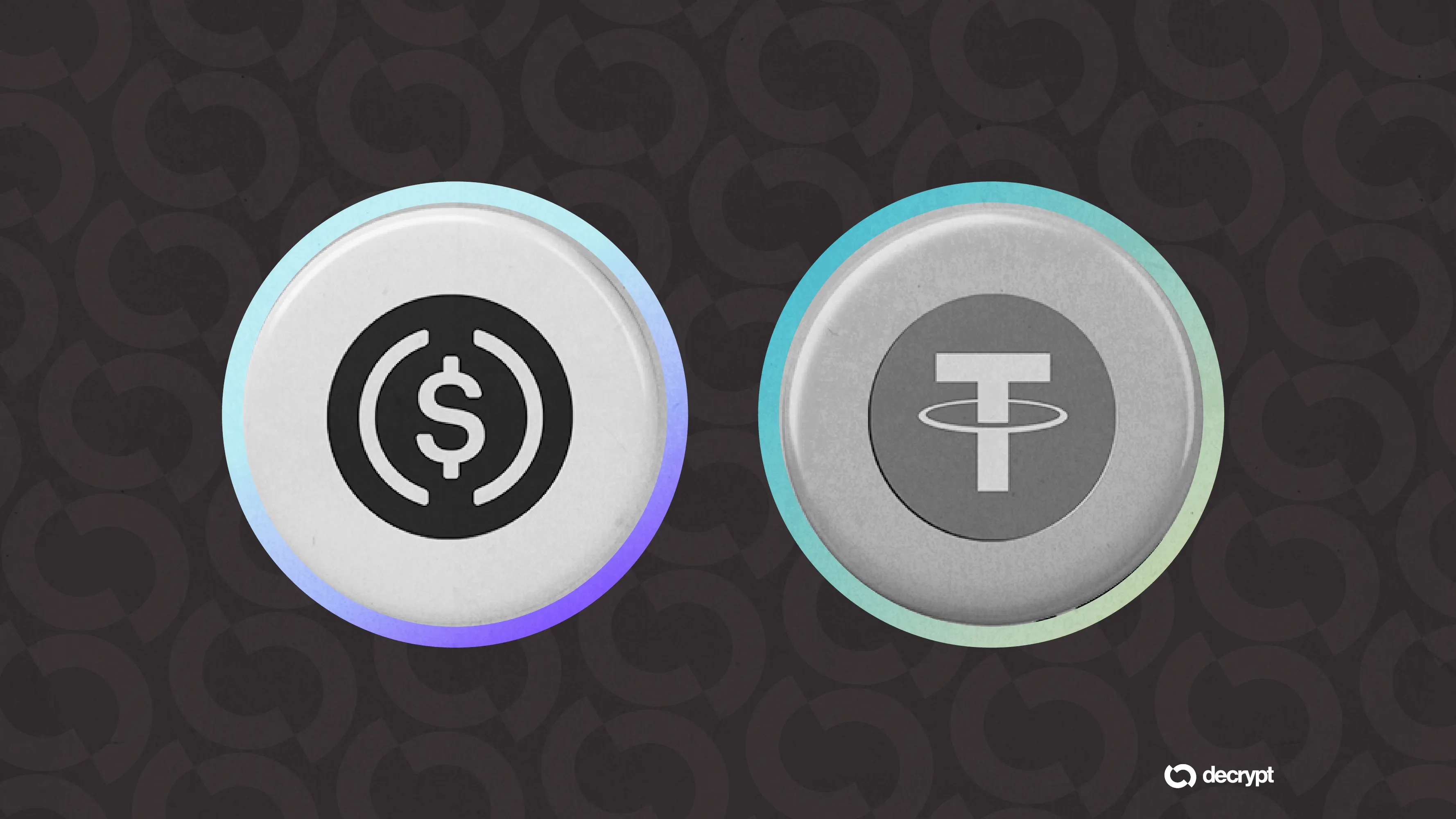
Most Americans still don't know what a stablecoin is. Offer them the safety net of a bank account, though, and a majority say they'd use one. That's the principal finding from Visa's Money Travels 2026 report, released Wednesday. In a hypothetical scenario where stablecoins came with bank-level fraud protection and deposit insurance, the share of Americans willing to use them for international transfers jumped from 36% to 56%, the payments giant said. Myriad: Where does Ethereum go next? Click t...

Law and Order
The U.S. Secret Service froze $52.8 million in cryptocurrency linked to Xinbi Guarantee on September 8, a Chinese-language marketplace that runs on Telegram and sells the tools scammers need to defraud people worldwide. The government agents worked with Blockchain analytics firm Elliptic to identify and freeze the funds. “Elliptic has been tracking Xinbi and its wallet infrastructure for several years, and our intelligence directly enabled the freezing action, as well as the sanctions imposed on...
Law and Order
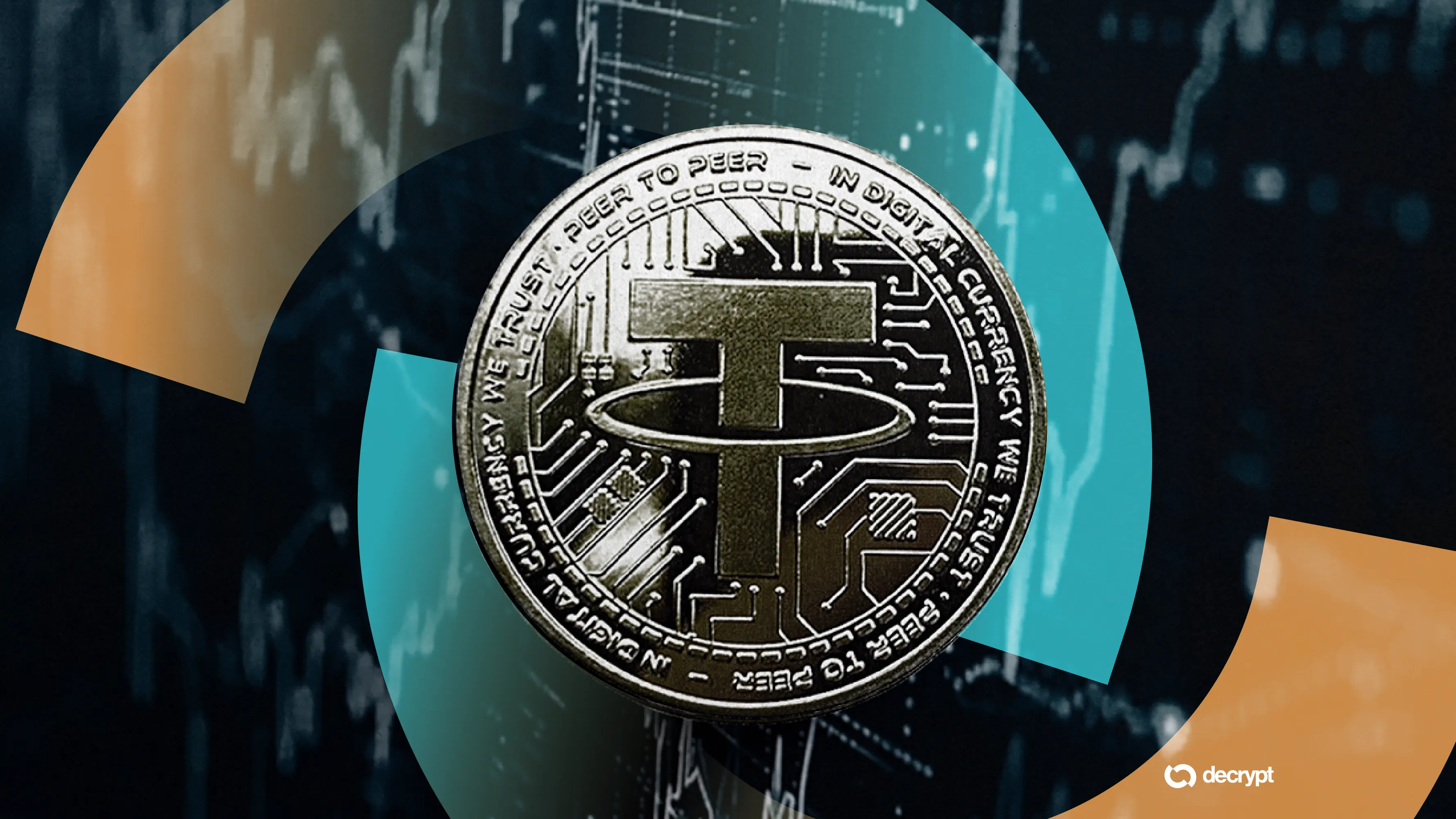
Two Thai businessmen sued Tether on Monday, claiming the stablecoin issuer froze roughly $42.4 million worth of USDT without legal authority. Nutthawat Rukthammachalern and Natthawat Kasamvilas filed the complaint in the U.S. District Court for the Southern District of New York. It names four Tether entities and concerns USDT held across ten Ethereum addresses. Myriad: Ethereum price this week? Click to make your prediction. According to the complaint, Tether blacklisted the addresses last Octob...
Business
Tokenized deposits could enable faster payments but make banks’ funding less stable, according to a report by the Dallas Federal Reserve. The report, published on Tuesday, examines how widespread adoption could affect bank liquidity and maturity transformation—the use of deposits available on demand to finance longer-term loans. Myriad: Crude oil's next move? Click to make your prediction. “Increasing adoption of distributed ledger technology—blockchain is the best known—has opened up digital pa...

Business
The top U.S. banking regulator says it will finalize its rules for stablecoin issuers by November, moving to beat a fast-approaching deadline for the country's landmark digital-dollar law. Jonathan Gould, head of the Office of the Comptroller of the Currency, laid out the timeline Wednesday at the Wyoming Blockchain Symposium, an event hosted by SALT in Jackson. He said the agency is working at a rapid pace and expects to publish a final rule by November as it weighs feedback gathered from the c...

Law and Order
The U.S. Department of the Treasury proposed rules Monday defining which stablecoins can be issued or sold in the United States under the GENIUS Act. The proposal implements Section 3 of the GENIUS Act, signed into law last summer. According to the proposal, beginning January 18, 2027, stablecoin issuers generally must obtain a federal or state license. Platforms can also sell foreign-issued stablecoins, but only if the foreign issuer complies with U.S. legal orders and agreements between the U....

Business
Tether said Thursday that Big Four accounting firm KPMG issued an unqualified audit opinion—industry jargon for the best possible result—-on the 2025 financial statements of Tether International, the company behind the world’s largest stablecoin USDT. In a post announcing the audit, Tether called the review the “largest inaugural financial audit in history,” saying KPMG examined Tether’s assets, liabilities, income, cash flows, internal systems, records, counterparties, and supporting documentat...
Law and Order
A former FBI supervisory special agent has been charged with stealing nearly $1 million in cryptocurrency from wallets tied to FBI counterintelligence investigations, according to court documents that also detail how he later asked ChatGPT for advice on investing the money and relocating overseas. On Friday, Patrick Steven Yaroch was charged with interstate transportation of stolen goods and receipt of stolen goods. Prosecutors allege the thefts occurred between early 2025 and July 2026 while Ya...
Business
Tether reported $1.5 billion in net operating profit for the second quarter, a nearly 50% increase against Q1 2026, as the stablecoin issuer increased USDT in circulation, expanded its reserve surplus to more than $4 billion, and added to its gold holdings despite a weaker stablecoin market. The company reported the results Friday in its latest quarterly attestation. Tether said that as of June 30 it held about $187.75 billion in assets against approximately $183.64 billion in liabilities, leavi...
Law and Order
The U.S. Treasury's Office of Foreign Assets Control sanctioned multiple cryptocurrency wallets tied to Iran's Central Bank and the Islamic Revolutionary Guard Corps on Tuesday, with stablecoin issuer Tether freezing over $131 million across four addresses on the Tron blockchain. Treasury Secretary Scott Bessent confirmed the move in a post on X, vowing the U.S. would "aggressively follow the money and deny the Iranian regime access" to illicit funds. Separately, the Treasury sanctioned seven in...
Markets
Bolivia’s economy is stabilizing, and now it is investigating the potential inclusion of Tether’s dollar-backed stablecoin USDT as a form of payment in the nation, according to a local news report from La Razón. The report stems from a Friday briefing from Bolivia’s Minister of Economy, José Gabriel Espinoza Yáñez, who highlighted the care that must be taken as part of the assessment. “Remember that Bolivia is on the [Financial Action Task Force] gray list, yet another consequence of the proble...
Law and Order
The Federal Reserve on Thursday issued a proposed rulemaking dictating how American crypto firms will have to evaluate customers and discourage money laundering now that stablecoins have been formally legalized. The rulemaking, proposed jointly with President Donald Trump’s administration agencies including the Treasury Department and the FDIC, interprets how to implement provisions of the GENIUS Act pertaining to customer identification requirements. The GENIUS Act, enacted last summer, formal...
Business
Trace Finance, a financial infrastructure company that links banks in Brazil and the United States to stablecoin settlement networks, said Wednesday that it has raised $32 million in a Series A funding round led by CoinFund, with backing from Coinbase Ventures, Haun Ventures, Jump Capital and several other crypto-focused investors. The raise comes as Brazilian regulators reclassify cross-border crypto transfers as foreign-exchange operations, a shift that is pushing institutional money away fro...
Law and Order
The U.S. Treasury Department's Office of Foreign Assets Control designated Nobitex, Iran's largest digital asset exchange, along with three other Iranian cryptocurrency platforms for allegedly facilitating terrorist financing and sanctions evasion. The Treasury Department alleges Nobitex processed more than 50% of all Iranian digital asset inflows in 2025 and facilitated payments tied to Iran's terrorist activities, sanctions evasion efforts, and Islamic Revolutionary Guard Corps-linked transac...
Law and Order
New York’s preeminent crypto regulator has charted a transatlantic path toward comprehensive stablecoin rules, aligning regulatory efforts on Tuesday with the European Union. In a 22-page memorandum of understanding, the New York Department of Financial Services and European Banking Authority detailed procedures intended to facilitate the exchange of supervisory and confidential information as it relates to the $314 billion sector. In a statement, the NYDFS described the measure as an effort to...
Business
Tether said on Monday that it plans to issue a stablecoin in Georgia with support from the country’s government, underscoring the nation’s aggressive push to establish itself as a crypto hub that’s uniquely aligned with U.S. regulations. The stablecoin, dubbed GELT, will serve as a digital representation of the Georgian lari, Tether said in an announcement. It described the move as among “the first joint efforts to place a national currency directly onto digital asset rails” under a purpose-buil...
Business
With the Bank of England gearing up to accept applications from would-be stablecoin issuers, its executive director of financial market infrastructure explained that the central bank is treating stablecoins as “a new form of money.” Speaking in a panel discussion at the Financial Times Digital Asset Summit, Sasha Mills noted that, “By the end of the year, we will be open and welcoming applications” from those looking to launch “a systemic stablecoin for widely used payments in the U.K.” Ahead o...

Artificial Intelligence
Tether, the stablecoin company best known for USDT, just released a medical AI model that fits in your pocket and may outperform rivals more than a dozen times its size. QVAC MedPsy launched today from Tether's AI Research Group as a new class of medical language models designed to run on smartphones, wearables, and edge devices—no cloud required. The headline number: a tiny 1.7 billion-parameter model capable of beating Google's MedGemma-4B on medical benchmarks despite being less than half i...

DeFi
A month after North Korean-affiliated hackers drained $295 million in user funds from decentralized crypto exchange Drift Protocol, the Solana-based platform has released a detailed recovery plan outlining how it intends to compensate affected users and relaunch as a rebuilt, security-focused exchange. The April 1 attack was attributed to a North Korea state-affiliated threat actor, as confirmed by forensic firm Mandiant. Following the exploit, Drift temporarily suspended all core protocol func...
